

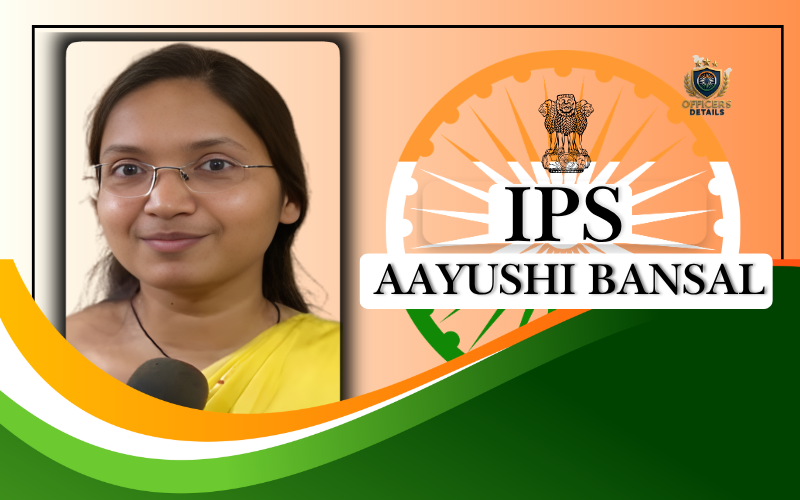
The Indian Administrative Service is closely connected with the planning, coordination, and implementation of many government activities across India. officersdetails.com provides an IAS Corner resource for readers who want practical information about officers, administrative positions, postings, career development, and public service. An IAS officer can work in different environments throughout a career, and the responsibilities can change significantly with each assignment. Some positions involve direct field administration, while others require policy review, departmental coordination, or management of larger government organizations. Officers may also become involved in public programs, revenue matters, elections, emergency response, and administrative reforms. Because the service has such a broad scope, understanding an officer’s role requires looking beyond a single designation. The actual work depends on the position, location, government priorities, and level of responsibility.
Government Work Has Different Levels
Government administration operates through several connected levels, and IAS officers can gain experience across different parts of this structure. Local and district administration often focuses on implementation and public service delivery. State departments may concentrate more heavily on policy, planning, budgeting, and coordination. Central government assignments can involve programs and decisions affecting several states or larger national priorities. These roles are connected, but the working methods can be quite different. An officer moving from one assignment to another may need to learn new procedures and understand different priorities. This is why flexibility remains important throughout an administrative career. Experience in one position can provide useful knowledge for another position, but officers still need to study the specific responsibilities attached to their new role. Government work is too broad for one routine to cover every assignment.
District Administration Remains Grounded
District-level administration can provide officers with direct exposure to public services and local government operations. Depending on the position, responsibilities may include reviewing development work, monitoring government programs, coordinating departments, inspecting facilities, supporting election arrangements, or dealing with administrative concerns. Field visits can be an important part of this work because official records do not always show every practical difficulty. An officer may visit a project location and find that implementation is technically complete but still facing maintenance or accessibility problems. Speaking with local officials and reviewing records together can provide a clearer picture. Citizens may also raise concerns about services, documentation, infrastructure, or delays. Officers need to consider these concerns within the relevant rules and administrative authority. District work therefore combines office responsibilities with practical observation and coordination.
Policy Assignments Require Patience
Policy-related positions often involve detailed reading and careful examination of government proposals. Officers may review reports, prepare notes, coordinate information, attend meetings, and assist senior authorities with administrative decisions. A proposal can contain several connected issues involving finance, law, staffing, technology, infrastructure, or implementation. Each aspect may require attention before a recommendation is prepared. Officers need to understand the available evidence instead of relying on assumptions. Clear writing is important because official notes should communicate the important facts and reasoning without unnecessary complexity. Coordination can become difficult when different departments have different responsibilities or priorities. Officers may need to bring together information from several offices before a decision can move forward. Policy work may happen away from direct public interaction, but its outcomes can influence large groups of people.
Postings Create Professional Variety
Different postings can expose IAS officers to very different types of administrative work. An officer may spend one period working in a district and later move into a departmental role with greater policy responsibility. Another assignment might involve a specialized area requiring new technical knowledge. Such changes can be demanding because officers need to become familiar with new systems quickly. At the same time, varied experience can strengthen professional judgment. An officer who has worked in different environments may understand how policies affect implementation more clearly. Exposure to several departments can also reveal how government responsibilities overlap. Career variety does not mean every assignment will be easy or equally interesting. Some roles may require extensive documentation, while others can involve demanding coordination. Adaptability helps officers remain effective when professional circumstances change.
Civil Services Selection Takes Preparation
The Civil Services Examination conducted by the Union Public Service Commission is the main competitive examination through which candidates seek entry into the IAS and other services. The process includes different stages, and candidates need to understand the purpose of each one. The Preliminary Examination uses objective papers and serves as the initial screening stage. The Main Examination evaluates written knowledge, analysis, and expression. Candidates who qualify for the later stage participate in the Personality Test. The latest official notification should always be used when checking eligibility, vacancies, dates, and other examination requirements. Rules can change between examination cycles, and older information may no longer be accurate. Candidates should therefore begin preparation with a clear understanding of the current process. Good planning becomes easier when the examination requirements are known from the start.
Prelims Preparation Needs Balance
The Preliminary Examination requires broad preparation because several subjects are included in the General Studies paper. Candidates commonly cover history, geography, polity, economy, environment, science, and current affairs. The aptitude paper also requires suitable preparation according to the examination structure. Because the syllabus is broad, candidates can easily become overwhelmed by the number of available study resources. Reading more material is not always the best solution. Revision, previous papers, and mock tests need enough time as well. Previous papers can show how questions are framed and help candidates understand the difference between basic familiarity and actual examination readiness. Mock tests can improve timing and accuracy when followed by careful review. Candidates should identify why an answer was wrong rather than simply marking it as a mistake. This approach can gradually improve both knowledge and examination technique.
Mains Writing Needs Precision
The Main Examination places substantial importance on written expression and analytical thinking. Candidates need to understand what a question is actually asking before selecting information for the answer. Some questions require explanation, while others expect analysis, evaluation, comparison, or discussion. A response filled with facts may still be weak if it does not address the central demand. Candidates should practice writing within the required word limits and time constraints. This helps develop the ability to select useful information instead of trying to include everything. Examples can support an argument when they are relevant and concise. Reviewing answers after writing them can reveal recurring problems such as poor structure, repetition, weak reasoning, or incomplete coverage. Improvement usually comes through repeated writing and correction. Candidates should focus on clarity rather than making every sentence unnecessarily complicated.
Optional Choice Needs Research
The optional subject can have an important place in Main Examination preparation, so candidates should select it carefully. Interest in the subject can help maintain motivation during detailed study. Academic background may provide an advantage, but candidates without formal background can also choose a subject if they are comfortable with its syllabus. Previous examination papers can provide valuable information about question patterns. Candidates should also check the official syllabus and available preparation resources. An optional subject requires repeated revision and answer practice, which means the decision should not be taken casually. Following another candidate’s choice without considering personal suitability can create difficulties later. There is no single optional subject that guarantees success. The practical choice is one that a candidate can study consistently and revise properly over the long preparation period.
Interview Measures Overall Personality
The Personality Test gives the board an opportunity to interact directly with candidates. Questions can come from the candidate’s educational background, interests, work experience, optional subject, current events, or information provided in the application. Candidates should understand these areas because follow-up questions may become specific. Memorized answers can become difficult to maintain when the discussion moves in another direction. Genuine understanding provides greater flexibility and allows candidates to respond naturally. Candidates should listen carefully and avoid answering before fully understanding the question. If they do not know something, it is better to acknowledge that limitation than provide uncertain information with false confidence. Mock interviews can help improve comfort with formal questioning. However, preparation should not turn every response into a rehearsed performance because the board is also observing communication and reasoning.
Training Starts Professional Learning
Training introduces selected officers to important administrative procedures and professional responsibilities. Depending on the applicable training structure, officers may receive classroom instruction, field exposure, institutional experience, practical assignments, and other forms of learning. The purpose is to create a foundation before officers begin handling significant responsibilities. Field exposure can help new officers understand how government systems function outside written descriptions. They may observe public service delivery, local offices, development programs, and departmental coordination. Working with experienced officials can also provide practical lessons that are difficult to learn from books. Training does not cover every situation an officer will encounter during a long career. Instead, it provides basic tools and encourages a habit of continuous professional learning. Actual postings then become another major source of experience and development.
Monitoring Shows Real Progress
Government programs require regular monitoring to determine whether planned objectives are being achieved. Officers may examine departmental reports, progress figures, inspection findings, meetings, digital dashboards, and feedback from field officials. Data can identify where performance is weak, but it does not always explain why the problem exists. A delayed project could involve funding issues, staffing limitations, technical obstacles, land concerns, or administrative delays. Officials need to understand the cause before recommending a solution. Field visits can help confirm whether reported progress matches actual conditions. Monitoring should therefore involve both information review and practical verification. The purpose is not simply to produce reports for senior authorities. Effective monitoring should help identify problems early enough for departments to make useful corrections. Regular review can also reveal repeated issues that may require changes in administrative processes.
Public Communication Needs Clarity
Administrative officers communicate with many groups during their professional work. They may interact with senior officials, departmental employees, local authorities, technical experts, elected representatives, and citizens. Each group can require a different communication approach. Official documents should be precise because they become part of government records and may guide future decisions. Public communication should be understandable because complicated language can create confusion about procedures. Listening is equally important because citizens may explain problems using everyday language rather than administrative terminology. Officers need to identify the actual issue before deciding what response is possible. Even when a request cannot be approved, explaining the relevant process can reduce misunderstanding. Good communication also helps departments coordinate when responsibilities are divided across multiple offices. Administrative efficiency can suffer when information is incomplete or poorly communicated.
Leadership Depends On Delegation
As officers take on larger responsibilities, leadership becomes increasingly connected with team management. A senior officer may supervise multiple teams and coordinate several departments, making personal control of every task impossible. Delegation becomes necessary in such situations. Responsibilities should be communicated clearly, while suitable monitoring should remain in place. Officers may also need to seek advice from technical, legal, financial, or other specialists. Effective leadership does not require personally knowing every answer. It requires identifying what needs to be decided and ensuring that the right information reaches the decision-maker. Good leadership can also involve supporting employees and resolving disagreements within teams. A department works more effectively when staff understand their responsibilities and feel accountable for their work. Leadership therefore affects not only immediate tasks but also the overall reliability of administrative systems.
Emergency Planning Saves Time
Emergency situations can place sudden pressure on government administration. Natural disasters and other serious disruptions may require several departments and agencies to coordinate quickly. Depending on their responsibilities, officers may become involved with relief arrangements, logistics, communication, infrastructure, local administration, and public information. Preparedness plans can provide a useful framework before an emergency occurs. Clear responsibilities and communication channels can reduce confusion when time becomes limited. However, actual conditions may differ from prepared expectations, requiring officers to adjust their response. Information can change quickly, so decisions need to be based on the best available facts at that moment. After the emergency, authorities can review the response and identify areas for improvement. This review can strengthen future preparedness and reduce repeated administrative weaknesses.
Technology Supports Modern Administration
Digital systems now form an important part of many government processes. Electronic files, online applications, databases, dashboards, and digital communication can improve information sharing and reduce certain administrative delays. Officers may use digital systems to monitor programs and review information across different locations. However, technology also introduces challenges that need attention. Incorrect data can influence decisions, technical failures can interrupt services, and citizens may have unequal access to digital platforms. Some people may need support when completing online procedures. Administrators therefore need to consider accessibility alongside efficiency. Digital tools should make public services easier to use rather than create new barriers. Officers also need enough understanding of digital systems to question unusual data and recognize possible limitations. Technology can support administration, but responsible human judgment remains necessary.
Ethics Guide Administrative Authority
IAS officers exercise public authority, so ethical conduct remains an important professional responsibility. Decisions should follow applicable laws, rules, procedures, and legitimate government directions. Officers can encounter situations where different groups have competing demands or where resources cannot satisfy every request. Fair consideration of facts becomes particularly important in these situations. Proper documentation can support accountability by showing how a decision was reached. Professional integrity also means maintaining appropriate standards when facing pressure or disagreement. Ethics is often included in Civil Services preparation, but its relevance continues long after the examination. Citizens need confidence that public authority is being exercised responsibly. Ethical administration can therefore strengthen trust in institutions and support better professional decision-making.
Transfers Encourage Fresh Learning
Transfers can introduce officers to new locations, departments, teams, and administrative responsibilities. Each new posting can require some adjustment because local priorities and working procedures may differ. Officers may also need to understand a new subject area within a short period. Building professional relationships with a new team takes time as well. These challenges can make transitions demanding, but varied assignments can also create valuable learning opportunities. Officers gain exposure to different administrative conditions and may develop a wider understanding of government systems. A person who has worked in several departments may recognize connections that are not obvious from one assignment alone. Adaptability therefore remains useful throughout the career. Officers who approach new postings with a willingness to learn can often make the transition more productive.
Career Growth Increases Responsibility
Professional progression can gradually bring broader responsibilities and more complex administrative decisions. Senior assignments may involve managing larger organizations, coordinating multiple departments, reviewing major programs, and participating in policy decisions. The focus can shift from handling individual issues toward improving systems and organizational performance. Delegation becomes essential because senior officers need to rely on capable teams. Experience from previous postings can help officers recognize recurring administrative problems. They may also use that experience when evaluating whether a proposed change is practical. Seniority alone does not eliminate the need for learning because every department can involve specialized issues. Officers may continue developing their understanding through professional experience, consultation, and exposure to new assignments. Career growth is therefore closely connected with the ability to handle wider responsibilities.
Preparation Needs Consistent Effort
Civil Services preparation can become stressful when candidates continuously change their strategy or collect excessive study material. A practical plan should give enough time to learning, revision, current affairs, previous papers, mock tests, and answer writing. Candidates should choose reliable sources and study them properly before adding more material. Repeated revision is important because the syllabus is too broad to retain through one reading. Previous papers can help candidates understand the actual examination requirements and avoid preparing only according to assumptions. Mock tests can reveal weaknesses in knowledge, timing, and question selection. Mistakes should be reviewed carefully so that the same problems do not continue. Candidates should also maintain reasonable rest because preparation requires sustained concentration. A realistic routine followed consistently can be more useful than an extreme schedule that becomes impossible after a few weeks.
Conclusion For Future Administrators
The IAS provides a broad career connected with field administration, public services, policy development, departmental coordination, program monitoring, and administrative leadership. Officers can move through different assignments during their careers, and each posting can bring new responsibilities and professional challenges. District work may provide direct exposure to local issues, while secretariat and central assignments can involve broader policy and organizational responsibilities. The Civil Services Examination requires careful preparation across its different stages, but professional success after selection also depends on communication, leadership, ethical judgment, adaptability, teamwork, and practical decision-making. Modern administration increasingly uses digital systems and data, yet technology still needs responsible human oversight. Aspirants should use current official notifications when checking examination rules, eligibility conditions, vacancies, and schedules because these details may change between examination cycles. They should also build a sustainable study routine that supports steady progress instead of depending on short periods of intense effort. Readers interested in IAS officers, administrative careers, postings, responsibilities, and public service can explore more useful IAS Corner information for a broader understanding of the field. Visit officersdetails.com for additional IAS-focused content and continue learning about the roles and responsibilities that support effective public administration across India.
Read also :-