

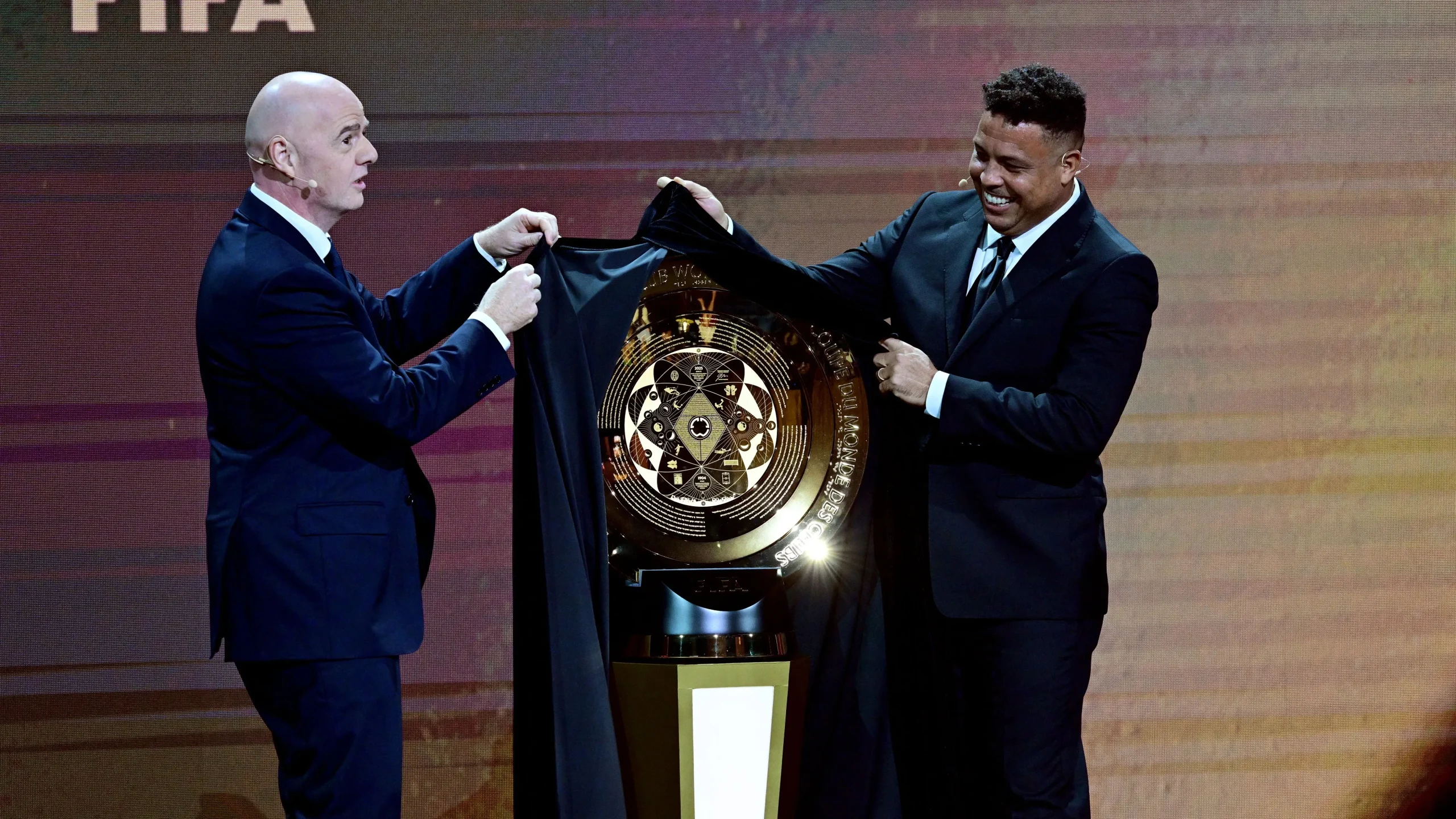
FIFA Club World Cup Expansion represents one of the most significant shifts in the history of international club football, moving away from a small, annual gathering to a massive, quadrennial spectacle. For years, the tournament was a relatively low-key affair held in December, often viewed as a mid-season distraction for European giants and a dream-come-true for clubs from other continents. That era is officially ending as we prepare for a revamped format that mirrors the scale and prestige of the national team World Cup.
The decision to grow this competition was not made in a vacuum. FIFA has long harbored the ambition to create a club tournament that rivals the UEFA Champions League in terms of global viewership and commercial revenue. By expanding the field to thirty-two teams, the governing body is attempting to crown a definitive world champion in a format that tests endurance, squad depth, and tactical flexibility over the course of a full month.
This move has sparked a firestorm of debate across the footballing world, pitting the desire for global growth against the realities of an already congested fixture calendar. Fans are divided between the excitement of seeing more cross-continental matchups and the fear that the sport’s biggest stars are being pushed toward a breaking point. It is a complex narrative that touches on economics, player welfare, and the very soul of the game.
To understand where we are going, we have to look at where we started. The old format featured only seven teams and was often criticized for being too predictable, with the European representative winning almost every edition since 2012. The new vision aims to shatter that predictability by introducing a group stage followed by a knockout phase, ensuring that every team must earn their way to the trophy through a rigorous schedule of high-stakes matches.
The Mechanics of the FIFA Club World Cup Expansion
The structural changes are vast and require a complete rethink of how clubs plan their long-term cycles. Under the new guidelines, the tournament will take place every four years, with the inaugural edition set to be hosted in the United States in 2025. This timing is strategic, serving as a massive promotional lead-in to the 2026 FIFA World Cup, which will also be held across North America.
The qualification process for this expanded field is designed to reward both historical success and recent dominance. For Europe, twelve slots are available, with the winners of the Champions League from the previous four seasons receiving automatic entry. The remaining spots are filled based on a sophisticated club ranking system that accounts for performance in continental competitions over a four-year period.
South America follows a similar logic, with six spots allocated to the giants of the CONMEBOL region. The remaining fourteen spots are distributed among Africa, Asia, North America, and Oceania, with one final spot reserved for the host nation. This distribution ensures that every corner of the globe has a seat at the table, fulfilling FIFA’s promise of a truly inclusive world championship.
From a tactical perspective, the FIFA Club World Cup Expansion forces managers to reconsider their summer preparations. Instead of a standard pre-season tour focused on commercial appearances and fitness building, top clubs will now be thrust into a competitive environment with a major trophy on the line. This could lead to a fundamental change in how transfer windows are managed, as teams look to bolster their squads to handle a month of intense competition in the heat of a June summer.
Addressing Challenges of the FIFA Club World Cup Expansion
While the excitement among fans in emerging markets is undeniable, the pushback from player unions and domestic leagues has been significant. Organizations like FIFPRO have raised serious concerns about the physical and mental toll on athletes who are already playing sixty to seventy matches a year. The addition of a month-long tournament during the traditional off-season leaves very little time for recovery and recuperation.
We have already heard prominent players speak out about the “congested calendar” and the risk of burnout. When a player finishes a grueling domestic season and a continental championship like the Euros or Copa America, the last thing their body needs is another high-intensity tournament. This conflict between commercial expansion and player safety is perhaps the biggest hurdle that the new format faces in its quest for legitimacy.
Domestic leagues are also worried about the impact on their own brands. If the world’s elite clubs are busy competing in a FIFA-sanctioned tournament, it could diminish the value of domestic pre-season events and delay the start of local league campaigns. There is a delicate balance of power in football, and many see this expansion as a direct challenge to the dominance of the European league structures.
Despite these hurdles, the financial incentives are staggering. FIFA expects to generate billions in broadcasting rights and sponsorships, a portion of which will be distributed among the participating clubs. For a team from Africa or Asia, the prize money alone could be transformative, providing the funds necessary to upgrade infrastructure and develop youth academies. This redistribution of wealth is a key pillar of the argument in favor of the expansion.
The commercial allure also extends to the host cities. In the United States, stadiums that are typically used for the NFL will be transformed into cathedrals of soccer, drawing in thousands of traveling fans from across the globe. This creates a festival-like atmosphere that can boost local economies and increase the sport’s footprint in a market that is still catching the “soccer bug” ahead of the 2026 World Cup.
One of the most fascinating aspects of this new era is the opportunity for “giant-killing” on a global scale. In the old format, a team from the AFC or CAF might only get one shot at a European giant in the semi-finals. Now, they will be placed in groups alongside them, providing more opportunities for tactical upsets and the birth of new international rivalries. This is where the true “World Cup” feel comes into play.
We must also consider the fans who rarely get to see their heroes in person. For a supporter in Tokyo or Cairo, the chance to see Real Madrid or Manchester City play in a competitive tournament—rather than a meaningless friendly—is a powerful draw. The FIFA Club World Cup Expansion is, at its heart, a move toward a more globalized version of the sport where the elite are not just confined to the borders of Europe.
The technological aspect of the tournament will likely be cutting-edge. We can expect to see the latest in semi-automated offside technology, advanced VAR protocols, and player-tracking data that will be shared with fans in real-time. FIFA often uses its major tournaments as a testing ground for innovation, and the 2025 event will be no different, providing a glimpse into the future of how football is officiated and broadcasted.
Critics argue that the tournament might lead to a “rich get richer” scenario, where the same elite clubs continue to dominate and pull away from the rest of the pack. To counter this, there have been discussions about solidarity payments for clubs that do not qualify, ensuring that the wealth generated by the event helps support the entire footballing pyramid. Whether this will be enough to satisfy the skeptics remains to be seen.
The psychological pressure on the players will be immense. Playing for your club is different than playing for your country; the day-to-day familiarity and the pressure from the fans who pay your wages create a unique atmosphere. Winning a “World Cup” with your club teammates would be a crowning achievement for any professional, adding a new layer of prestige to an already decorated career.
As the countdown to 2025 continues, the logistical planning is reaching a fever pitch. Organizing travel, accommodation, and training facilities for thirty-two world-class teams across a country as large as the United States is a monumental task. The success of the FIFA Club World Cup Expansion will depend heavily on the smoothness of this operation and the quality of the pitches provided for the athletes.
There is also the question of squad management. Will clubs be allowed to register new signings made in the early part of the summer window, or will they be forced to use the squad from the previous season? These regulatory details are still being ironed out, and they will have a significant impact on how competitive the matches actually are.
The role of the fans cannot be understated. Football without its supporters is nothing, and the success of the new format hinges on whether fans will embrace it with the same passion they show for the Champions League or the traditional World Cup. If the stadiums are full and the atmosphere is electric, the critics will likely be silenced. If not, the tournament risks becoming a hollow commercial exercise.
We should also look at the impact on women’s football. FIFA has expressed a strong desire to launch a similar expanded Club World Cup for women, which would be a massive boost for the professionalization of the female game globally. The men’s expansion acts as a blueprint for what could eventually be a thriving ecosystem for both genders, further solidifying football’s position as the world’s truly universal sport.
The cultural exchange that happens during such a tournament is another hidden benefit. When fans from Brazil, Saudi Arabia, and England all converge in one city, it creates a melting pot of footballing philosophies and traditions. This “soft power” of football is something that FIFA is very keen to promote, using the beautiful game as a bridge between different cultures and nations.
For many years, the debate about “who is the best club in the world” was settled by a single match or a short series of games. The FIFA Club World Cup Expansion changes the criteria for greatness. To be the best in the world now means surviving a group stage, winning three or four knockout rounds, and overcoming the best teams from every continent in a compressed timeframe. It is a much higher bar to clear.
The evolution of scouting will also be impacted. Smaller clubs participating in the tournament will have a global shop window for their best players. A standout performance against a Premier League side could lead to a life-changing transfer for a player from a smaller league, providing a clear pathway for talent to move from the periphery to the center of the footballing world.
Looking forward, the tournament could lead to a more synchronized global calendar. If the Club World Cup becomes a permanent and respected fixture every four years, leagues around the world might finally agree on a unified schedule that prioritizes player health and ensures that the best talent is always available for the biggest stages. This is an optimistic view, but it is one that many in the game are working toward.
The media landscape is also shifting. With traditional television rights being challenged by streaming giants, the expanded Club World Cup provides a perfect piece of content for a global platform. The ability to stream every match to every country in the world via a single app is a powerful prospect that could redefine how we watch and interact with live sports.
Ultimately, the FIFA Club World Cup Expansion is a gamble on the future. It is a bet that the world is ready for more high-level football and that the appetite for global competition will outweigh the concerns about scheduling. Like any major change in a traditional sport, it will face resistance, and there will be growing pains in the early editions.
However, if the tournament delivers high-quality football, dramatic storylines, and a fair competition, it has the potential to become one of the most beloved events in the sporting calendar. It is a bold step into the unknown, driven by the belief that football belongs to the entire world, not just a few select leagues. As we move closer to the first kickoff in the United States, the anticipation will only continue to build.
The players will be the ultimate judges of the tournament’s success. If they feel that the glory of being a world champion is worth the extra effort, they will perform at their best and elevate the competition to new heights. If the burnout becomes too much, we might see teams sending weakened squads, which would be a disaster for the tournament’s prestige.
The next few years will be a period of intense observation and adjustment. FIFA will likely listen to the feedback from the 2025 edition and make changes for 2029. This iterative process is how great tournaments are built, and the club game is finally getting its chance to shine on the grandest stage of all. The journey is just beginning, and the destination is a truly globalized version of the sport we all love.
We are entering an era where the term “world champion” will carry a weight it never had before in the club game. It will no longer be an asterisk or a minor achievement; it will be a testament to a club’s ability to dominate the globe. This is the vision behind the expansion, and it is a vision that could change football forever.