


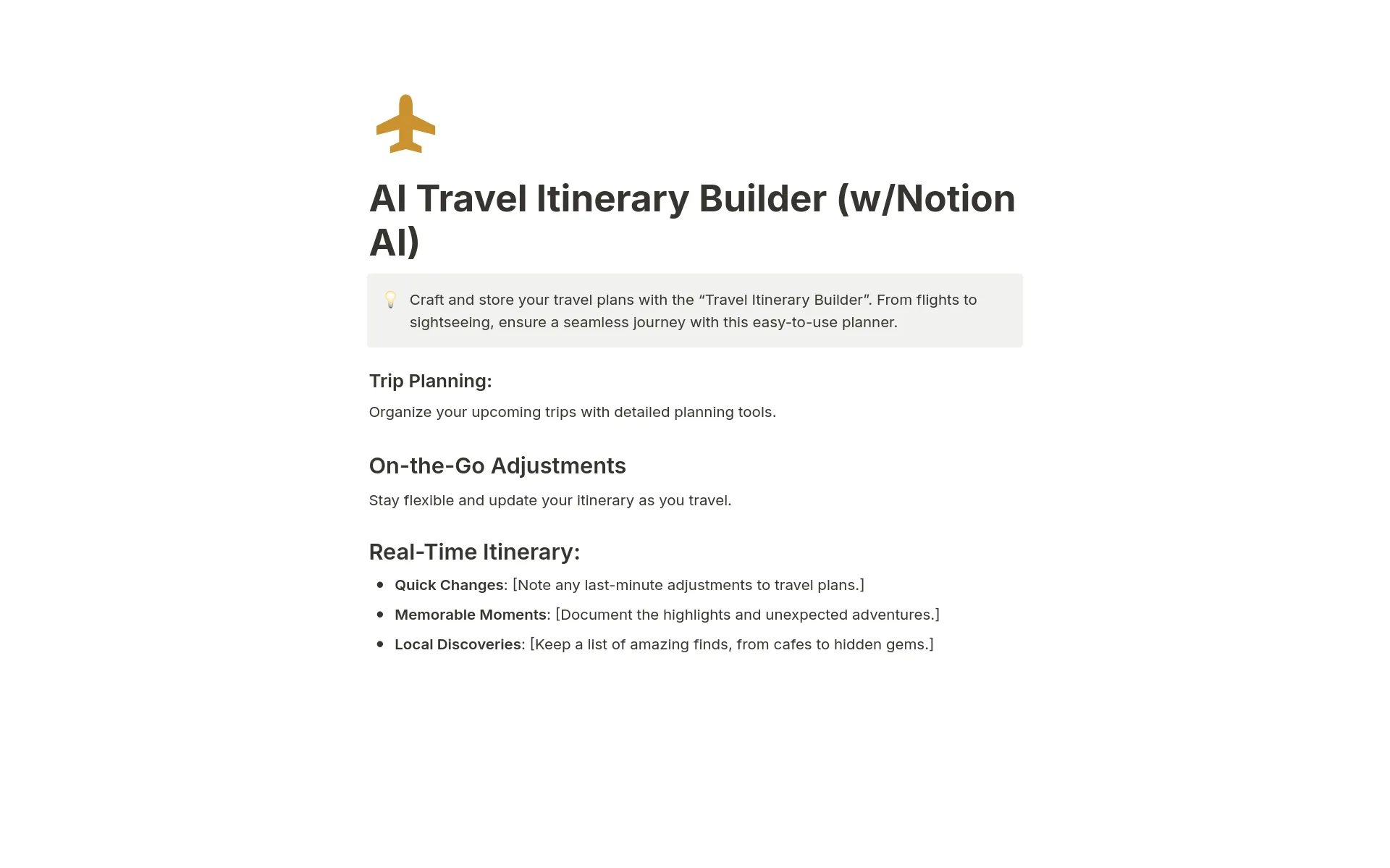
AI Trip Itinerary Builder technology is fundamentally changing the way we see the world by removing the overwhelming stress that usually comes with planning a complex vacation. We have all experienced that moment of “analysis paralysis” where you have forty browser tabs open, three different travel books on your lap, and a growing sense of dread that you are going to miss the best parts of your destination. For decades, travelers were forced to rely on generic “top ten” lists that often led everyone to the same crowded tourist traps at the exact same time of day. Now, we are entering an era where your travel plans can be as unique as your own fingerprint, crafted in seconds by an intelligent system that understands your specific quirks, cravings, and curiosities.
Imagine you are planning a trip to a city as vibrant and chaotic as Tokyo or as historically dense as Rome. In the past, you would spend weeks trying to figure out which neighborhoods are walkable, which museums require pre-booked tickets, and where to find a quiet cafe that serves the specific type of artisan pastry you saw on a food blog. With a modern travel assistant, that entire process is condensed into a simple conversation. You simply tell the system that you love brutalist architecture, you are traveling with a toddler who needs a nap at two in the afternoon, and you have a strict budget for dinners but want to splurge on a high-end hotel. The intelligence then weaves these disparate threads into a cohesive, logical, and exciting journey.
The beauty of this evolution is that it doesn’t just provide a list of places; it provides a sense of flow and rhythm to your days. One of the biggest mistakes travelers make is over-scheduling themselves, forgetting that transit time and human fatigue are very real factors. A smart planning tool understands that if you visit the Vatican in the morning, you will likely be too exhausted for a three-hour walking tour of the catacombs immediately afterward. It builds in “buffer time,” suggests scenic routes between stops, and ensures that you aren’t zig-zagging across a city in a way that wastes your precious vacation hours. This is the difference between a trip that feels like a frantic scavenger hunt and one that feels like a well-paced adventure.
For those of us who travel for the sake of the “hidden gems,” these tools are a complete revelation. We often think of artificial intelligence as something that only knows the most popular data points, but the reality is quite the opposite. Because these systems can process millions of reviews, blog posts, and local news articles, they can often identify a tiny, family-run vineyard in Tuscany or a secret rooftop garden in Manhattan that hasn’t yet been overrun by social media influencers. They act as a digital concierge that has read every single travel review ever written, filtering out the noise to find exactly what fits your personal aesthetic and values.
Exploring the Magic of an AI Trip Itinerary Builder for Modern Travelers
When we dive into the mechanics of how an AI Trip Itinerary Builder actually works, it is important to realize that it isn’t just a search engine with a fancy interface. It is a synthesis engine that uses “geographic clustering” and “temporal logic” to make sure your trip makes physical sense. If you want to see five different landmarks in London, the system identifies that the Tower of London and Tower Bridge are neighbors, while the Natural History Museum is several miles away. It groups these locations together to minimize your time spent on the Underground and maximize your time spent actually looking at the exhibits. This logistical mastery is something that used to take human travel agents hours to perfect, and now it happens in the blink of an eye.
There is also a profound element of personalization that goes beyond just picking a destination. For a traveler with specific dietary needs, such as a vegan who is also gluten-free, finding safe and delicious places to eat in a foreign country can be a constant source of anxiety. Instead of searching “restaurants near me” every few hours, the itinerary builder can pre-identify every dining spot along your daily route that meets your criteria. It can even suggest the best dish to order based on recent customer sentiment. This level of foresight allows travelers to relax and enjoy the scenery, knowing that the logistical heavy lifting has already been taken care of by a reliable digital partner.
Beyond the individual traveler, these tools are proving to be a godsend for group travel, which is notoriously difficult to manage. Anyone who has tried to coordinate a family reunion or a bachelor party knows that trying to satisfy five or ten different personalities is nearly impossible. You have one person who wants to hike at sunrise and another who wants to sleep in and go shopping. A sophisticated planning tool can create “split itineraries” where the group spends part of the day together and part of the day following their own interests, only to reunite at a perfectly chosen dinner spot that fits everyone’s budget. It removes the social friction of “what should we do now?” and replaces it with a clear, agreed-upon path.
Furthermore, the integration of real-time data is a game-changer for the spontaneity of travel. In the old days, if a museum was unexpectedly closed for a private event or a sudden rainstorm ruined your beach day, your entire plan was thrown into chaos. Today, an AI Trip Itinerary Builder can detect these changes and offer instant alternatives. It can see that the weather in Paris is turning gray and suggest moving your Louvre visit to today while pushing the picnic at the Champ de Mars to tomorrow when the sun is expected to return. This flexibility ensures that a single bad break doesn’t ruin your entire experience, allowing you to remain agile and positive no matter what the world throws at you.
How an AI Trip Itinerary Builder Solves Common Travel Planning Stress
One of the most significant psychological barriers to travel is the sheer volume of choices available to us in the digital age. We are living through an era of “information abundance,” where there is so much advice available that we often end up doing nothing at all. This is where the curation aspect of a smart builder becomes so valuable. It acts as a filter, removing the options that it knows you won’t like based on your previous preferences. If you have consistently skipped art galleries in your past five trips, the system won’t waste your time suggesting the Uffizi, even if it is the “number one” thing to do in Florence. It respects your time by only showing you what truly resonates with your soul.
Trust and expertise are also central to the way these tools are evolving. Travelers are increasingly wary of “fake reviews” and sponsored content that clutters up traditional search results. Because an AI Trip Itinerary Builder can analyze the language patterns of reviews, it can often distinguish between a genuine recommendation from a local and a biased review from someone with an ulterior motive. This adds a layer of “Expertise and Trustworthiness” to the planning process that was previously missing. You feel more confident stepping into a dark, basement jazz club in Prague because the intelligence has verified its reputation across dozens of different data sources, ensuring you have a safe and authentic experience.
Budgeting is another area where many vacations go off the rails, leading to “financial hangovers” once the traveler returns home. It is very easy to lose track of spending when you are paying in a foreign currency and moving between different cities. A smart itinerary builder can track your estimated costs in real-time as you add or remove activities. It can tell you, “If you book this luxury train ride, you will need to choose a more modest hotel for the final three nights to stay within your total budget.” This kind of honest, data-driven feedback helps travelers make better decisions in the moment, preventing the post-vacation regret that comes from overspending.
Accessibility is a vital but often overlooked part of the travel industry that these tools are finally addressing with the seriousness it deserves. For travelers with mobility challenges, finding a route that is truly wheelchair-accessible involves more than just checking for a ramp. It involves knowing the quality of the pavement, the width of the doorways, and the reliability of the elevators in local transit stations. Advanced AI can cross-reference accessibility databases with street-level imagery to provide a route that is genuinely safe and accessible. This opens up the world to millions of people who might have previously stayed home out of fear that the world wouldn’t be able to accommodate their needs.
The Sustainable and Conscious Future of Global Exploration
As we become more aware of our impact on the planet, the way we travel is undergoing a massive ethical shift. “Overtourism” has become a serious problem in places like Venice, Barcelona, and Kyoto, where the local infrastructure is struggling to keep up with the sheer volume of visitors. A responsible AI Trip Itinerary Builder can help alleviate this by suggesting “dupe” destinations—places that offer a similar vibe or cultural experience to a famous landmark but without the crowds. Instead of sending everyone to the same crowded beach in Bali, it might suggest a stunning coastal village in Lombok that provides a more peaceful experience while supporting a local economy that actually needs the tourism revenue.
The system can also prioritize eco-friendly transportation options, such as high-speed rail over short-haul flights, or suggesting walking tours and bike rentals within a city. It can identify hotels that have high sustainability ratings and restaurants that source their ingredients from local organic farms. By making these choices the “default” or highly recommended options, the technology nudges travelers toward a more conscious and respectful way of exploring the globe. This isn’t just about being “green”; it’s about ensuring that the beautiful places we love to visit remain beautiful and vibrant for the generations of travelers who will come after us.
In addition to environmental sustainability, there is the concept of “cultural sustainability.” Travel should be an exchange of ideas and respect, not just a commodity to be consumed. An intelligent builder can provide “cultural briefings” before you arrive in a new country, explaining local customs, basic phrases, and etiquette tips that help you avoid accidental disrespect. It might remind you to cover your shoulders before entering a temple in Thailand or explain the tipping culture in a small village in France. These small pieces of knowledge transform you from a mere “tourist” into a “guest,” fostering better relationships between visitors and host communities.
We are also seeing the rise of “slow travel” being encouraged by these digital systems. Instead of trying to see five countries in ten days, the AI might suggest spending a full week in a single region, allowing you to truly soak in the atmosphere and discover the rhythm of local life. It can find long-term apartment rentals, local workshops like pottery or cooking classes, and community events that don’t make it into the big travel magazines. This shift toward depth over breadth results in a much more meaningful and restorative holiday, where you return home feeling like you actually learned something about the world and yourself.
Seamless Integration and the “Zero-Friction” Travel Experience
The ultimate goal of any AI Trip Itinerary Builder is to create a “zero-friction” experience from the moment you leave your front door to the moment you return. This involves integrating your flights, hotel bookings, restaurant reservations, and activity tickets into a single, live document that lives on your phone. If your flight is delayed, the system can automatically notify your hotel and reschedule your dinner reservation without you having to lift a finger. This level of automated logistics removes the “travel anxiety” that keeps many people from venturing too far from home, making the world feel smaller and more accessible.
We are even seeing the emergence of “multimodal” transit planning, where the system tells you exactly when to leave your hotel to catch a bus that connects to a ferry that arrives just in time for your museum entrance. It can provide photos of the specific bus stop or the entrance to the train station so you never feel lost. For anyone who has ever wandered around a train station in a foreign country trying to find the right platform, this kind of visual and logistical guidance is worth its weight in gold. It replaces confusion with confidence, allowing you to walk through the world like a local even if it is your very first day in the city.
The “on-trip” assistance is perhaps the most impressive part of the journey. If you find yourself in the middle of a park and suddenly feel like having a gelato, you can just ask the assistant, and it will find the highest-rated shop within a five-minute walk that is currently open. It can translate signs in real-time through your camera, help you calculate a tip in the local currency, and even explain the history of the statue you are currently standing in front of. It is like having a historian, a translator, and a local guide all living inside your pocket, ready to help whenever you have a question or a need.
As we look toward the next few years, the capabilities of these tools will only expand. We will see more integration with wearable technology, where your watch might vibrate to tell you that your train is arriving or that a historic landmark is just around the corner. We might see “social travel” features where you can see where your friends have traveled and “import” their favorite spots directly into your own plan. The technology is moving away from being a “tool” and toward being a true “partner” in the human experience of discovery. It is an exciting time to be alive for anyone with a sense of wanderlust and a desire to see what lies over the next horizon.
The true value of this technology isn’t just in the time it saves or the money it helps you manage; it is in the memories it helps you create. By handling the boring, stressful, and complicated parts of travel, it frees up your mental and emotional energy to actually be present in the moment. It allows you to watch the sunset over the Santorini caldera or listen to the street musicians in New Orleans without worrying about where you are going to eat or how you are going to get back to your hotel. It gives us back the “wonder” of travel, ensuring that our adventures are as magical as we always hoped they would be.
Ultimately, the best itinerary is the one that you actually enjoy living out. Whether you are a solo traveler seeking a spiritual retreat, a couple looking for a romantic escape, or a group of friends chasing the next big thrill, the right technology can make your vision a reality. The world is a vast, beautiful, and complex place, and we are finally developing the tools that are sophisticated enough to help us navigate it with grace and ease. So, the next time you find yourself staring at a blank map and wondering where to go, remember that you don’t have to do it alone. The future of travel is here, and it is ready to help you write your next great story.