

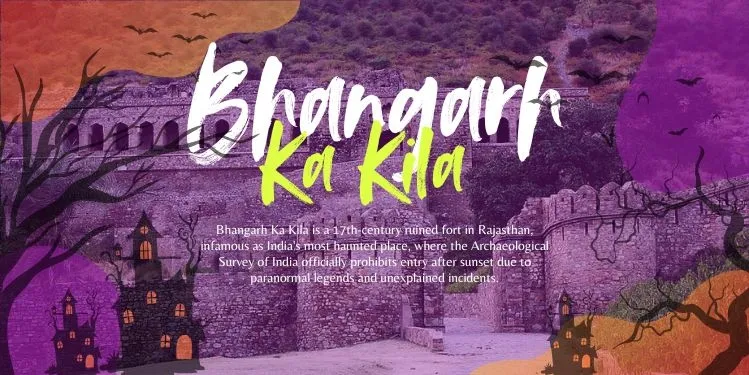
Haunted places attract curious travelers because unusual histories and local legends can make ordinary destinations feel completely different. travelwikitips.com features travel content covering Haunted Places, including material about Bhangarh Fort and Kundanbagh Haunted House. Stories about abandoned buildings, old forts, mysterious deaths, strange sounds, and unexplained experiences continue attracting attention across India. Some locations have well-documented historical backgrounds, while their paranormal reputations come mainly from local stories passed between generations. That difference matters when readers try to understand what is actually known. A place can have an interesting haunted reputation without every supernatural claim being scientifically established. Bhangarh Fort in Rajasthan is a useful example because its ruins have a strong connection with local folklore and tourism. Kundanbagh in Hyderabad represents another type of location because its reputation comes from an urban legend surrounding an old residential property. These places show how history, architecture, memory, rumor, and popular culture can combine over time. Travelers interested in unusual destinations often want more than a frightening story. They also want information about location, accessibility, restrictions, surrounding attractions, responsible behavior, and the history behind the reputation. Safety becomes particularly important because old structures may contain unstable walls, damaged floors, restricted areas, wildlife, or other physical hazards. Visiting a haunted destination should therefore involve ordinary travel precautions even when the attraction is based mostly on folklore. Respect for local residents and heritage sites also matters because many unusual locations exist within living communities. Photography should follow local rules, while restricted buildings should never be entered without permission. The most rewarding experience often comes from viewing these places with both curiosity and skepticism. Travelers can enjoy mysterious stories without automatically treating every claim as established fact. This balanced approach makes haunted destinations interesting from historical, cultural, architectural, and travel perspectives. It also encourages visitors to look beyond the frightening reputation and understand why a place became famous in the first place.
Understand Haunted Reputation Properly
A haunted reputation usually develops from several different sources rather than one confirmed explanation. Local stories may describe strange sightings, unusual sounds, unexplained events, or people experiencing discomfort in particular locations. Historical tragedies can add emotional weight to those stories because people naturally connect difficult past events with mysterious experiences. Abandoned buildings also create powerful impressions because darkness, silence, damaged structures, and limited human activity can make ordinary sounds seem unusual. Popular films, television programs, social media posts, and online articles can further increase public interest. Over time, the original details may become mixed with newer claims that were not part of the earliest version. Travelers should therefore separate documented history from local belief whenever possible. A location can have a genuinely fascinating past even when paranormal claims remain unverified. This distinction does not make the destination less interesting. In many cases, the history itself provides enough reason for visiting or learning more. Bhangarh Fort, for example, is a protected historical site whose reputation as a haunted location has become closely connected with its ruins and surrounding legends. The site’s attraction therefore comes from both heritage and folklore. Kundanbagh has a different character because it is an urban property associated with a widely circulated mysterious story, while public access is restricted. Travelers should avoid treating online claims as automatically verified because dramatic details can spread rapidly without reliable evidence. Looking for information from historical institutions, local authorities, established travel sources, or direct site information can provide better context. This habit is useful for any destination involving rumors or unusual claims. The most interesting question may not always be whether a ghost exists. It can also involve asking how a particular story developed and why people continue remembering it. That perspective turns a frightening destination into a subject involving history, psychology, architecture, and culture.
Explore Historic Fort Legends
Historic forts often develop mysterious reputations because their walls contain stories involving wars, rulers, prisoners, abandoned settlements, and long periods of decline. Old architecture naturally creates an atmosphere that can encourage imaginative interpretations, especially when parts of a complex remain quiet or damaged. Bhangarh Fort is one of India’s most recognizable examples of this connection between heritage and haunted folklore. The fort is located in Rajasthan and is presented by travel sources as a historic ruin strongly associated with paranormal legends. Its surviving temples, market areas, walls, gateways, and palace ruins provide evidence of an earlier settlement that had considerable architectural importance. Visitors can therefore approach the location as a heritage destination even without accepting supernatural explanations. The legends surrounding the fort have become an important part of its public identity, which adds another cultural layer to the visit. However, travelers should understand that popular stories and verified historical records are not necessarily the same thing. Claims about curses, spirits, or unusual nighttime activity should be treated as folklore unless reliable evidence establishes something more specific. The physical condition of old ruins also creates real concerns that deserve more attention than supernatural fears. Uneven paths, damaged structures, falling stones, and isolated areas can create genuine risks for visitors. Site restrictions should always be followed because protected monuments need conservation and controlled access. Visitors should avoid climbing walls, entering closed structures, damaging surfaces, or leaving written marks behind. Photography can be enjoyable when it does not interfere with other visitors or violate site rules. A daytime visit can also provide a clearer opportunity to study the architecture and landscape without relying entirely on the atmosphere created by darkness. Historic forts are valuable because they connect present-day travelers with earlier communities. Their legends may be fascinating, but the buildings themselves often provide the strongest evidence about the past. Exploring both aspects creates a more balanced and meaningful experience for curious visitors.
Study Mysterious Old Houses
Old houses can develop haunted reputations for very different reasons than large historical forts because their stories are often connected with individual families, neighborhoods, rumors, or unusual events. Kundanbagh Haunted House in Hyderabad is one example that has gained attention through a mysterious local story involving an old residential property and alleged paranormal activity. Travel information about the location notes that public entry is restricted and that the property is associated with an urban legend. This distinction matters because travelers should not assume that every location described as haunted functions as an ordinary tourist attraction. Some properties are private, guarded, occupied nearby, or otherwise unsuitable for direct exploration. Respecting those boundaries is more important than satisfying curiosity. Visitors can learn about a place through reliable descriptions, historical context, exterior views where permitted, and local reporting rather than attempting unauthorized entry. Urban legends also demonstrate how quickly a story can become part of a neighborhood’s identity. A mysterious event may be retold repeatedly until certain details become accepted as part of the location’s reputation. Online platforms can then amplify the story to audiences far beyond the original community. That does not automatically prove or disprove the underlying claims. It simply shows how folklore spreads. Travelers should remain especially careful with stories involving deaths or private individuals because sensational retelling can become disrespectful. The human side of a story deserves consideration even when the location has become famous for frightening reasons. Old houses can also present ordinary physical hazards when abandoned or poorly maintained. Broken glass, weak floors, exposed wiring, unstable walls, and restricted access can create real dangers. There is little value in taking unnecessary risks for a photograph or dramatic experience. A responsible approach is observing permitted areas and treating nearby residents with consideration. Haunted houses can be culturally interesting without becoming places for reckless exploration. Their stories provide opportunities to examine how communities remember unusual events. That perspective can make these destinations more interesting than simply treating them as scary backdrops.
Look Beyond The Ghost Stories
Haunted destinations often contain more than the supernatural stories that made them popular online. Their architecture, geography, history, local culture, and surrounding environment can provide equally strong reasons to visit. Bhangarh Fort, for example, includes surviving religious structures, palace ruins, market remains, defensive walls, and views of the surrounding landscape. These features provide travelers with opportunities to understand how the settlement was organized before it became known mainly for frightening legends. A similar principle applies to old houses and abandoned properties because their physical surroundings can reveal changes in urban development and community history. Travelers should therefore spend time observing the actual destination instead of focusing only on paranormal claims. Architectural details can show construction methods, changes made over time, and patterns of historical use. Vegetation can also provide clues about how long a structure has remained neglected or how the surrounding environment has changed. Local museums, heritage materials, guides, and historical records can add useful information that social media posts often omit. This broader approach creates a more complete travel experience. It also prevents the destination from becoming reduced to a single frightening label. Haunted reputations can sometimes overshadow cultural value, especially when dramatic stories attract more attention than careful historical information. Visitors can help counter that problem by learning about the location responsibly. They can photograph interesting architectural features, read available information, and support legitimate local tourism services where appropriate. Food, nearby attractions, traditional markets, natural landscapes, and other activities can also become part of the trip. This makes the visit less dependent on whether the traveler personally experiences anything unusual. A place does not need a supernatural encounter to be memorable. Atmosphere, history, architecture, and local culture can create enough interest on their own. Travelers who understand this usually leave with more than a frightening story. They leave with a broader understanding of the destination and why it continues to attract attention.
Check Access Before Visiting
Access conditions matter greatly when visiting unusual destinations because not every location described online as haunted is open for ordinary tourism. Some places operate as protected monuments with specific visiting hours, while others may be private properties where visitors cannot legally enter. Bhangarh Fort is described by travel information as having controlled entry and restrictions around visiting hours. Kundanbagh is described differently because access to the property itself is restricted. These differences show why travelers should verify current access information before making a trip. Online articles can become outdated, particularly when rules, security arrangements, restoration work, or local conditions change. Travelers should check official or current local information whenever possible. They should also confirm whether photography, guided visits, vehicles, or entry into specific areas are permitted. A location that appears easy to explore in an online video may have restrictions that were not obvious when the video was recorded. Visitors should never cross barriers or enter closed structures simply because other people appear to have done so. The rules exist for reasons that may involve safety, preservation, privacy, or local concerns. Travel planning should also include transportation because some unusual places are located away from major roads or public transport routes. Weather conditions can make certain roads or walking paths more difficult during particular seasons. Travelers should consider daylight, footwear, drinking water, mobile coverage, and nearby facilities according to the destination. A basic preparation routine can prevent many unnecessary problems. People traveling in groups should also maintain communication and avoid separating unnecessarily in unfamiliar areas. Remote or abandoned-looking places can create real navigation problems when paths are unclear. Responsible visitors understand that curiosity does not remove normal travel responsibilities. Checking access before leaving home makes the trip more predictable and reduces the chance of reaching a location that cannot legally or safely be entered.
Respect Heritage And Property
Respect becomes especially important at haunted locations because the destination may be a protected monument, private property, active community space, or place connected with real human tragedy. Travelers should avoid treating historic ruins as entertainment objects that can be damaged for dramatic photographs. Climbing fragile walls can increase structural damage, while removing stones or artifacts can destroy information about the site’s past. Writing names on walls creates permanent damage that future visitors will also see. Photography should remain within permitted areas and should not involve trespassing or unsafe positioning. Private houses require even greater consideration because the people living nearby have rights to privacy and quiet surroundings. Kundanbagh, for example, is described as a property with restricted entry rather than an ordinary open tourist site. Visitors should therefore rely on permitted exterior viewing or published information rather than attempting unauthorized access. Noise can also become a problem when groups visit residential or culturally important locations. Loud behavior can disturb nearby residents and reduce the quality of the experience for other travelers. Littering should never become part of exploring abandoned or historic places. Carrying personal waste back to suitable disposal points is a simple way to reduce damage. Local religious structures should also be treated respectfully because some old sites contain temples or other places still considered important by communities. Visitors should follow clothing, photography, entry, and behavior rules where they apply. Hiring local guides can sometimes provide useful historical context while supporting people who understand the area better. Travelers should still select guides through legitimate channels and avoid anyone encouraging unsafe or restricted activities. Respect does not make an unusual destination less exciting. It allows people to experience the place without harming the location or the people connected with it. Heritage sites survive because visitors choose not to treat them as disposable backgrounds. Responsible behavior protects the destination for future travelers and keeps its historical value intact.
Separate Facts From Folklore
The difference between verified information and folklore becomes particularly important when reading about haunted destinations. A historical event may be documented while later supernatural interpretations remain unverified. The two can exist together without needing to be treated as equally proven. Bhangarh’s history as a historic fort and protected heritage site can be discussed separately from stories about curses or paranormal activity. Kundanbagh provides another example where a mysterious story is widely discussed but paranormal explanations remain unconfirmed. Travelers can enjoy these legends while still recognizing the limits of available evidence. This balanced approach is particularly useful when articles use dramatic language designed to attract attention. A repeated claim does not automatically become a verified fact simply because thousands of people have seen it online. Photographs can also be misleading because darkness, camera settings, reflections, insects, dust, and unexpected movement can produce unusual-looking results. Sounds can have ordinary causes as well, particularly around old structures where wind, animals, loose materials, and distant activity can behave unpredictably. This does not mean every unusual experience has been explained. It simply means travelers should avoid drawing firm conclusions from limited observations. Historical research can provide stronger evidence about when a building was constructed, how it was used, why it was abandoned, and what documented events occurred there. Folklore research can then show how later stories developed around those facts. Both forms of information are valuable, but they answer different questions. Travelers can also ask local guides how stories are understood within the community rather than assuming every online version represents local belief accurately. This makes the experience more respectful and informative. A haunted destination can therefore be approached as both a place of history and a place of folklore. The mystery remains part of the attraction without requiring visitors to accept every supernatural explanation. Curiosity works best when it is combined with a willingness to examine evidence carefully.
Travel Safely Around Ruins
Safety concerns at haunted locations often come from ordinary environmental hazards rather than supernatural ideas. Abandoned buildings can contain unstable flooring, broken windows, damaged roofs, exposed metal, loose masonry, and other physical risks. Historic ruins may also have uneven walking surfaces that become difficult during rain or poor visibility. Travelers should stay on permitted paths and avoid climbing structures that were not designed for visitor access. Wearing suitable footwear can make walking across rough ground more comfortable and stable. Weather should also influence decisions because heat, rain, fog, or strong winds can change conditions quickly around exposed sites. Travelers should carry enough water for the expected outing when facilities are limited. A basic first-aid kit can also be useful during visits involving long walks or remote areas. People exploring unfamiliar destinations should share their route and expected return time with someone when appropriate. Group travel can provide additional support when locations are isolated or communication is limited. Travelers should avoid entering dark or closed structures simply to create a more dramatic experience. Flashlights can help with permitted areas, but lighting does not make an unsafe structure safe. Wildlife may also occupy abandoned buildings, especially in areas with dense vegetation. Visitors should avoid disturbing animals or approaching nests and other possible habitats. Roads and parking conditions deserve attention too because some unusual destinations may have limited nearby facilities. Mobile signals cannot be assumed to work everywhere. Travelers should download important directions or carry another reliable navigation method when appropriate. Food and water planning becomes more important for locations far from regular shops. Basic preparation can make a major difference without reducing the sense of mystery. The purpose of a haunted destination is to experience an unusual place, not to create avoidable danger. Ordinary travel precautions remain useful even when the attraction is based on unusual stories. Good preparation lets visitors focus on history, architecture, and atmosphere with greater confidence.
Explore Nearby Attractions Too
A haunted destination can become more worthwhile when travelers combine it with other attractions located nearby. This approach creates a broader trip and prevents the entire journey from depending on one unusual site. Bhangarh Fort, for example, is discussed alongside nearby destinations and natural attractions in travel information about the area. Travelers can explore historical structures, local markets, temples, natural landscapes, museums, food experiences, or other destinations within a reasonable travel radius. This also helps when the haunted location has limited visiting hours or restricted access. A short visit to one site can become part of a larger day rather than the only activity. Nearby attractions may provide additional historical context because regional settlements and landscapes often developed together. Food can also become an important part of the trip because local dishes provide another way to understand the region. Travelers should check current opening hours and access conditions rather than assuming every nearby attraction remains available throughout the year. Transportation time can also be longer than expected when roads are narrow or routes pass through rural areas. Planning a comfortable pace can make the trip more enjoyable. Photography enthusiasts may find that nearby landscapes provide better opportunities when a particular haunted property cannot be entered. This is especially relevant for private houses and restricted buildings. Travelers can also visit local cultural sites where photography and tourism are explicitly encouraged. The broader trip can therefore balance unusual interests with ordinary sightseeing. Families may prefer destinations that offer activities suitable for different ages rather than focusing exclusively on frightening stories. This makes the journey more inclusive. Travelers can also use local guides to understand which places are genuinely accessible and which are only subjects of neighborhood stories. Combining attractions reduces the pressure to seek a supernatural experience from one particular site. A successful trip can come from history, scenery, food, architecture, conversation, and the unusual story itself. The haunted reputation becomes one interesting part of the destination rather than the only reason for visiting.
Read Stories With Perspective
Haunted-place stories are most interesting when readers understand why people continue telling them and how those stories change over time. Fear is influenced by atmosphere, expectation, memory, cultural beliefs, and the information people receive before visiting. A person who hears a frightening story before entering an old building may naturally pay greater attention to ordinary noises, shadows, or movements. This does not mean that the person is deliberately imagining everything. Human perception is influenced by context, particularly when visibility and information are limited. Folklore also works through repetition because stories become familiar when families, neighbors, guides, journalists, and online communities repeat them. Some details may remain stable while others become more dramatic over time. Social media can accelerate this process because emotionally striking stories often receive more attention than ordinary historical explanations. Travelers should therefore ask where a particular claim originated and whether independent sources describe the same details. This habit can make online research more reliable. A story can remain culturally significant even when its supernatural explanation cannot be verified. Folklore provides insight into how communities interpret unusual places and remember difficult events. Historical context can reveal another layer that may have disappeared from simplified online versions. Travelers can therefore read frightening stories for atmosphere while also looking for documented information about the location. This creates a richer understanding. The goal is not proving or disproving every ghost story during a trip. It is recognizing which parts belong to history, which belong to folklore, and which remain uncertain. That distinction allows curiosity without unnecessary certainty. Readers may find that the unresolved questions are actually more interesting than a simple answer. A location with a complicated past can remain fascinating even after ordinary explanations are considered. Haunted places provide a useful reminder that destinations are shaped not only by buildings and landscapes, but also by the stories people attach to them. Those stories deserve curiosity, but they also deserve perspective.
Conclusion
Haunted places can offer much more than frightening stories because their appeal often comes from a combination of history, architecture, folklore, atmosphere, local memory, and unusual surroundings. Forts, abandoned buildings, old houses, historic ruins, and other mysterious locations can attract travelers who enjoy exploring destinations with a different kind of character. The most useful way to approach them is with curiosity while keeping a clear distinction between documented facts and supernatural claims.
Historic destinations such as Bhangarh Fort demonstrate how heritage and folklore can become closely connected over time, while urban legends such as the story surrounding Kundanbagh show how unusual local narratives can spread through communities and online platforms. Neither type of destination should be reduced to a frightening label. The architecture, history, surrounding culture, and real experiences connected with the location can provide much deeper reasons for interest.
Access rules deserve particular attention because some haunted destinations are protected monuments while others are private properties with restricted entry. Travelers should verify current visiting information, follow official instructions, avoid unauthorized access, and respect nearby residents. Old structures can also contain genuine physical hazards, including unstable surfaces, damaged walls, broken materials, poor lighting, difficult paths, and wildlife. Normal travel preparation remains essential regardless of how mysterious the destination may sound.
Respect for heritage and property should guide photography, movement, conversation, and general behavior. Visitors should avoid damaging structures, removing objects, crossing barriers, creating noise near homes, or treating real tragedies as entertainment props. Supporting legitimate local guides and tourism services can provide additional context while helping visitors understand the destination more responsibly.
A broader trip can also make the experience more rewarding because nearby historical sites, natural attractions, local food, markets, temples, museums, and cultural locations can add depth to the journey. This approach keeps the haunted reputation as one part of the travel experience rather than making it the entire purpose of the visit.
For readers interested in haunted places, mysterious destinations, historic forts, abandoned properties, local legends, unusual travel experiences, heritage sites, folklore, travel safety, and destination research, continue exploring dependable travel resources and thoughtful destination information. Explore more through travelwikitips.com, research current access conditions, separate documented history from folklore, respect local communities and heritage, and continue discovering unusual places with curiosity, responsibility, and a balanced travel perspective.
Read also :-